
BAGASÁO charts a bold new European chapter With a prime showroom deal and a return to Milan, the proudly Filipino label is ready for its global close-up
By September Grace Mahino
The past summer has been quite a busy time for designer Joseph Bagasao. That’s because his namesake label is set to debut as the first Filipino brand to be represented at Tora Tora, a showroom with physical spaces in Europe’s fashion capitals that caters to niche fashion clients. A wholly Filipino-owned company, BAGASÁO’s presence in Tora Tora’s Paris-based sales office could also reintroduce the Philippines as both a design and manufacturing hub, given that the brand has its pieces produced in the country.
The showroom deal is just one of the positive developments of FASHIONPhilippines in Milan, the business development and exhibition program for Filipino brands organized by the Center for International Trade Expositions and Missions (CITEM), in collaboration with the Department of Science and Technology – Philippine Textile Research Institute (DOST-PTRI), the Philippine Consulate General in Milan, the Philippine Fashion Coalition (PFC), Fondazione Sozzani, and LIT Fashion Consultancy. Bagasao joined the program’s pilot edition last year, along with 10 other designers.
“My contract with Tora Tora is actually [a result of] a good exchange between the showroom founder and me, because it’s not just a matter of their taking me in as a brand. Right from our initial call, it was actually almost like a mentorship,” the designer recalls during the FASHIONPhilippines team’s visit to his Makati studio, where he is busy putting together a collection that will be physically presented in the European showroom by the end of June. It will be the first in the two-season contract he signed with them, with the second one to be shown in October. “We discussed a lot of information that has really helped me prepare for this deal, since this is going to be my first try at joining an international showroom.”
Established in 2016, BAGASÁO has become known as a label that applies meticulous tailoring and thoughtfully restrained, handcrafted details on quality textiles to produce menswear and womenswear collections that deftly straddle contemporary silhouettes and a classic minimalist appeal. Bagasao describes them as “seasonless and cross-generational,” the pieces easy to mix and match across various collections. “Tora Tora found a good range of designs that they can offer to the stores that they usually cater to,” he says. “So I think it was really a matter of an alignment between their customer base and my brand.”
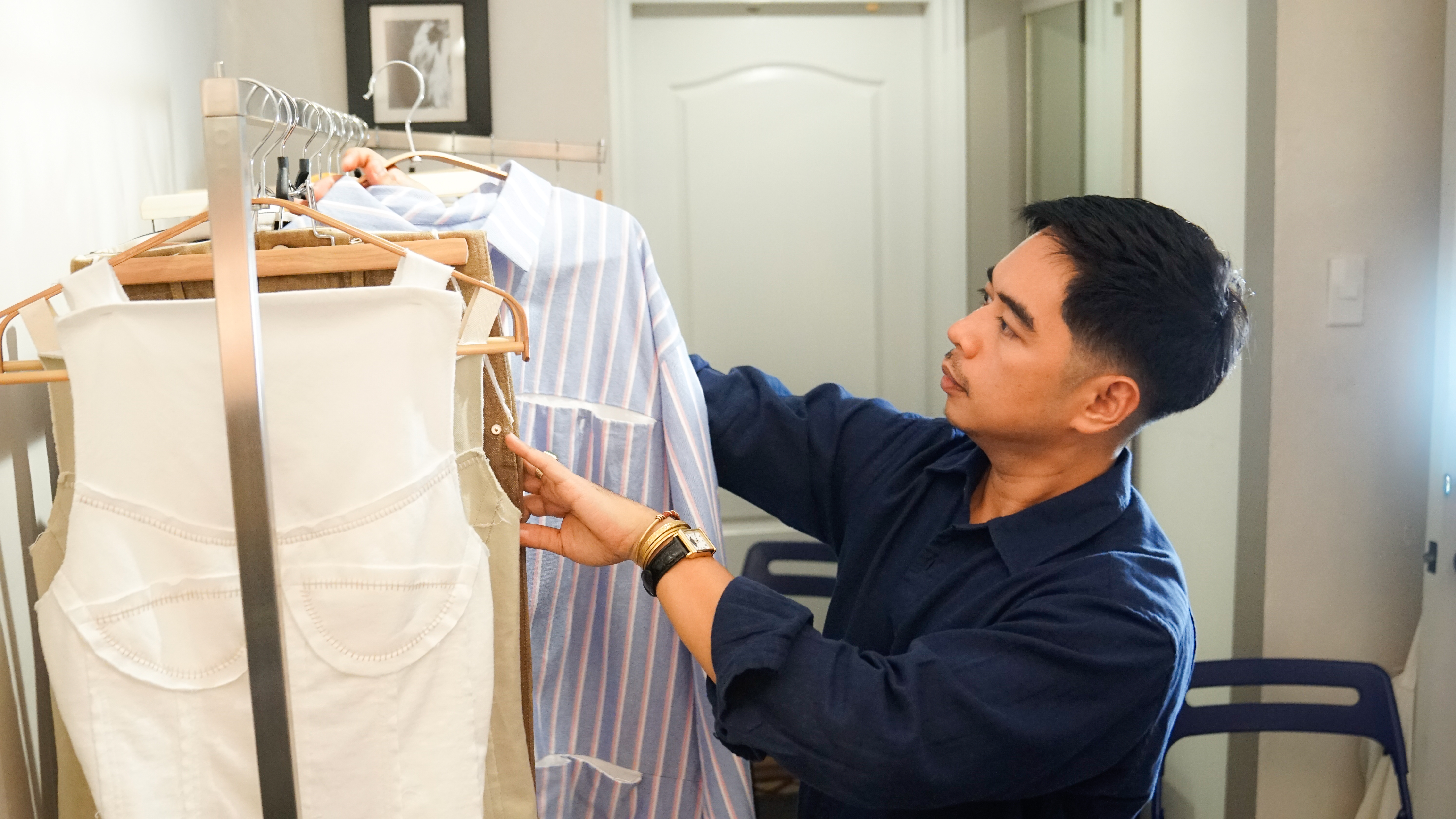
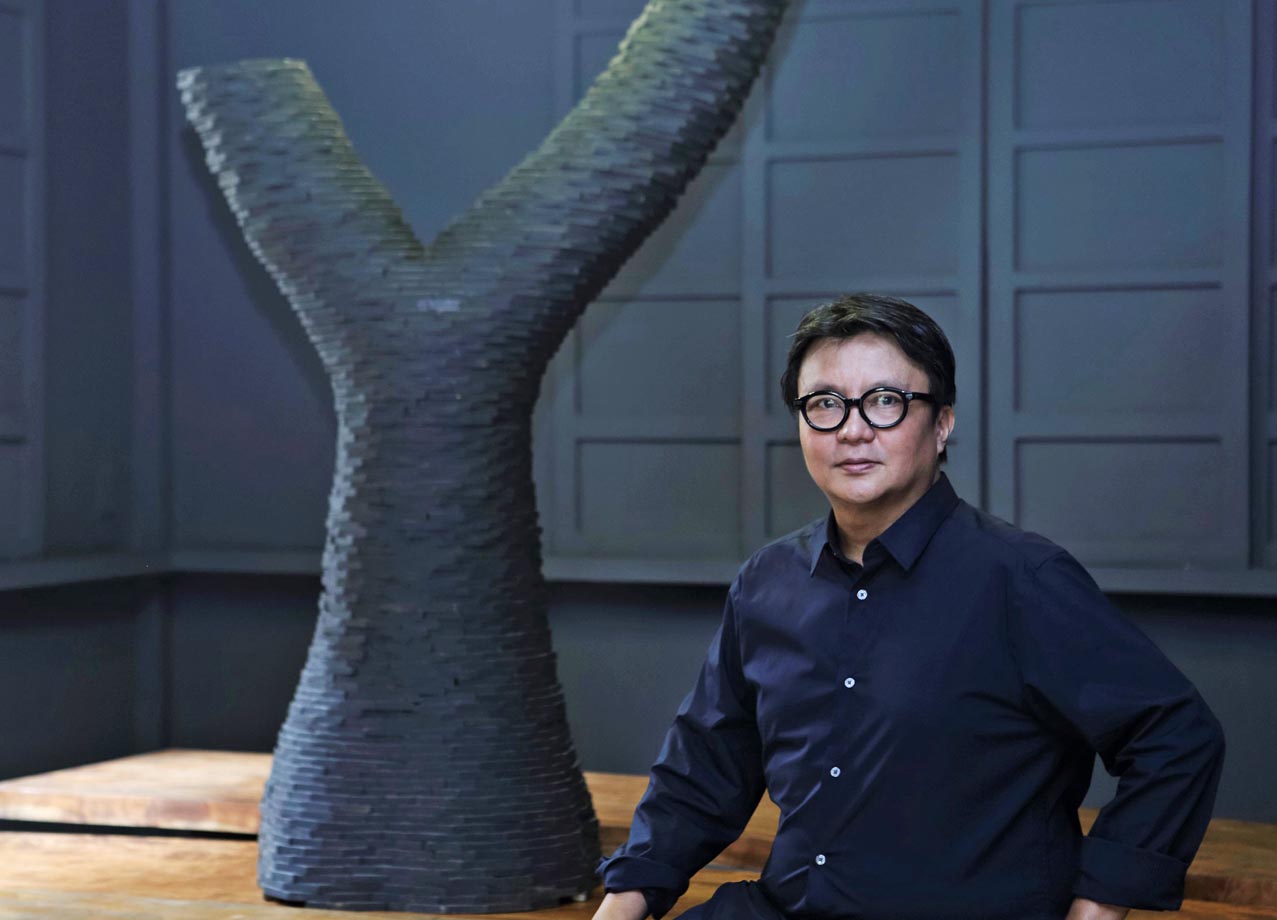
Joseph Bagasao has been busy producing collections that he’ll be showcasing in Europe, first for the Paris-based sales showroom of Tora Tora and then for the FASHIONPhilippines in Milan exhibition in September. Photo by Beatty Lyn Santos.
Indeed, Bagasao isn’t planning to change anything in his design process for his European market debut. Steadfast in his belief in the values upon which his brand was built, he envisions his collections for Tora Tora as a continuation of what he has already been doing. “A design’s importance lies in its longevity, and we have pieces that have stayed relevant even 5 years after we released them, like they’re still being ordered. So the way the showroom met me in terms of how I approach my brand is what they’re going to see in my collections. In fact, some of the pieces that they want me to show are from two years ago.”
One thing Bagasao is consciously working on improving, though, is the efficiency of his brand’s production process. He has been equally busy developing backup production plans for the collections he’ll be sending to Tora Tora. Since BAGASÁO is known for its distinct design perspective, choosing the right manufacturers to partner with is crucial. “In terms of establishing a brand here in the country, many independent labels are on a consignment basis with stores. It’s very direct-to-customer, which works here,” he observes. “Outside of the country, though, the requirements are different. I have my in-house system in place, but these pieces will be on display in Europe. So once an order comes in, I have no choice but to deliver, because the customer won’t think, ‘Oh, if I don’t get the order now, I’ll just try again next year.’ It doesn’t work that way there.”
Showcasing in Milan the second time around
Bagging a deal to sell in Europe may be seen as the penultimate benefit of joining an initiative like FASHIONPhilippines in Milan, but Bagasao has his sights set on something bigger and longer term. That is why he is joining the program once again to build on what he has learned the first time around. “Projects like this cannot be [run] just for one year,” he reasons. “You don’t join it in just one go and expect results. There has to be continuous work because the fashion industry is continuously evolving.”
With a September fashion showcase as the culminating event once again for the program, Bagasao is simultaneously working on the collection he’ll be presenting in Milan. Describing it as a continuation of the June pre-collection he’s been making, in terms of energy and design flow, he envisions the clothes to highlight the duality of the textiles he is using. “I’m trying to make use of fabric in a different sense. Like, if it is traditionally meant to be used for a specific kind of garment, then I’m using it for something else. It’s that kind of shift.”
Still a long way to go for Filipino fashion
Bagasao believes that 5 years is a more reasonable timeline for the participating designers—and the local design industry—to see tangible and sustainable results from FASHIONPhilippines in Milan. With most Filipino fashion labels, such as his, operating independently, he posits that designers need more practical support to bolster their businesses to be ready for an international audience. “It’s very important for stakeholders to understand how we work and what we need to run our brands,” he says. “You cannot just throw requirements for us to meet and expect us to come up with beautiful pieces without knowing where the resources to create them are going to come from.”
.jpg)
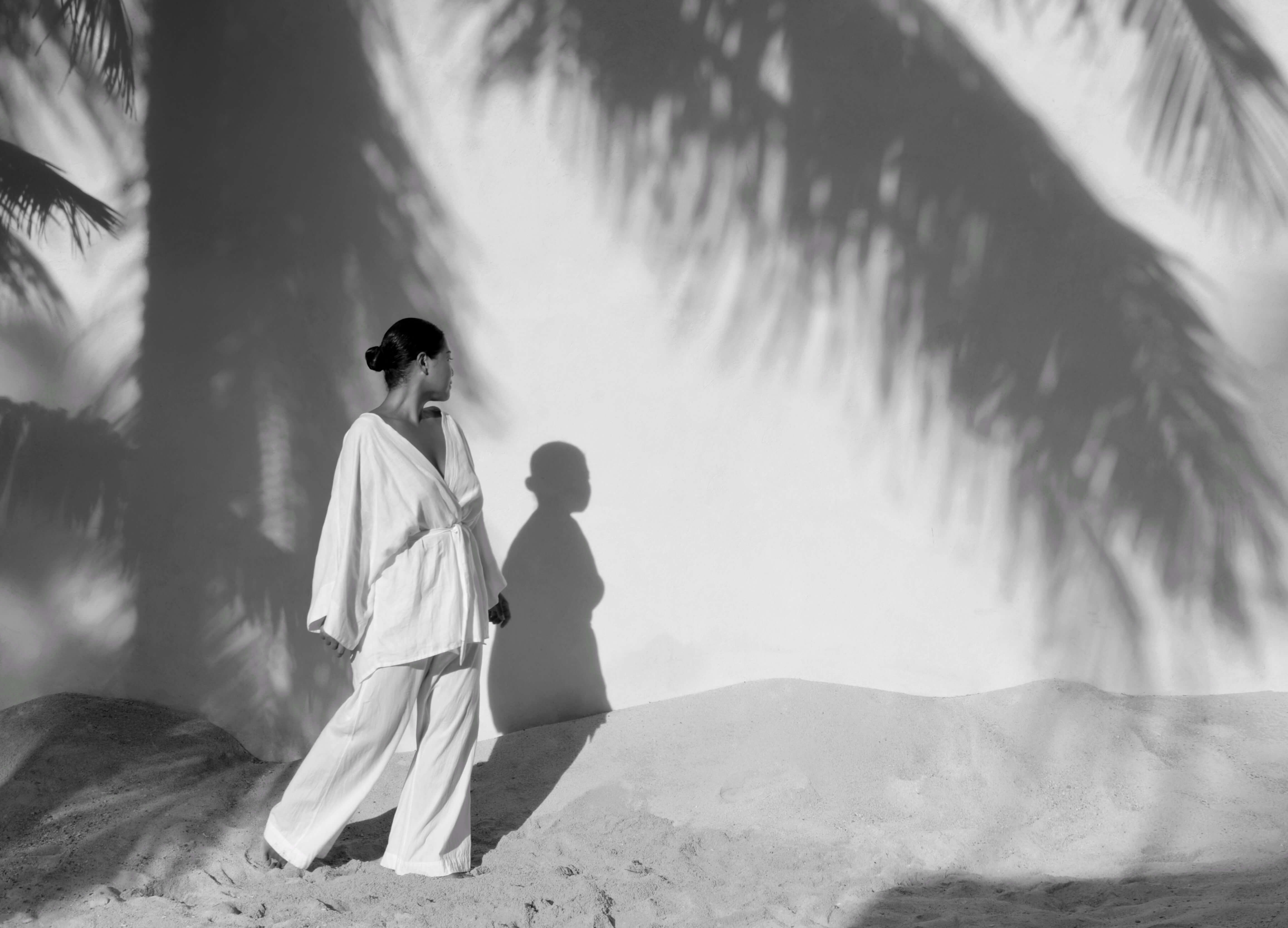
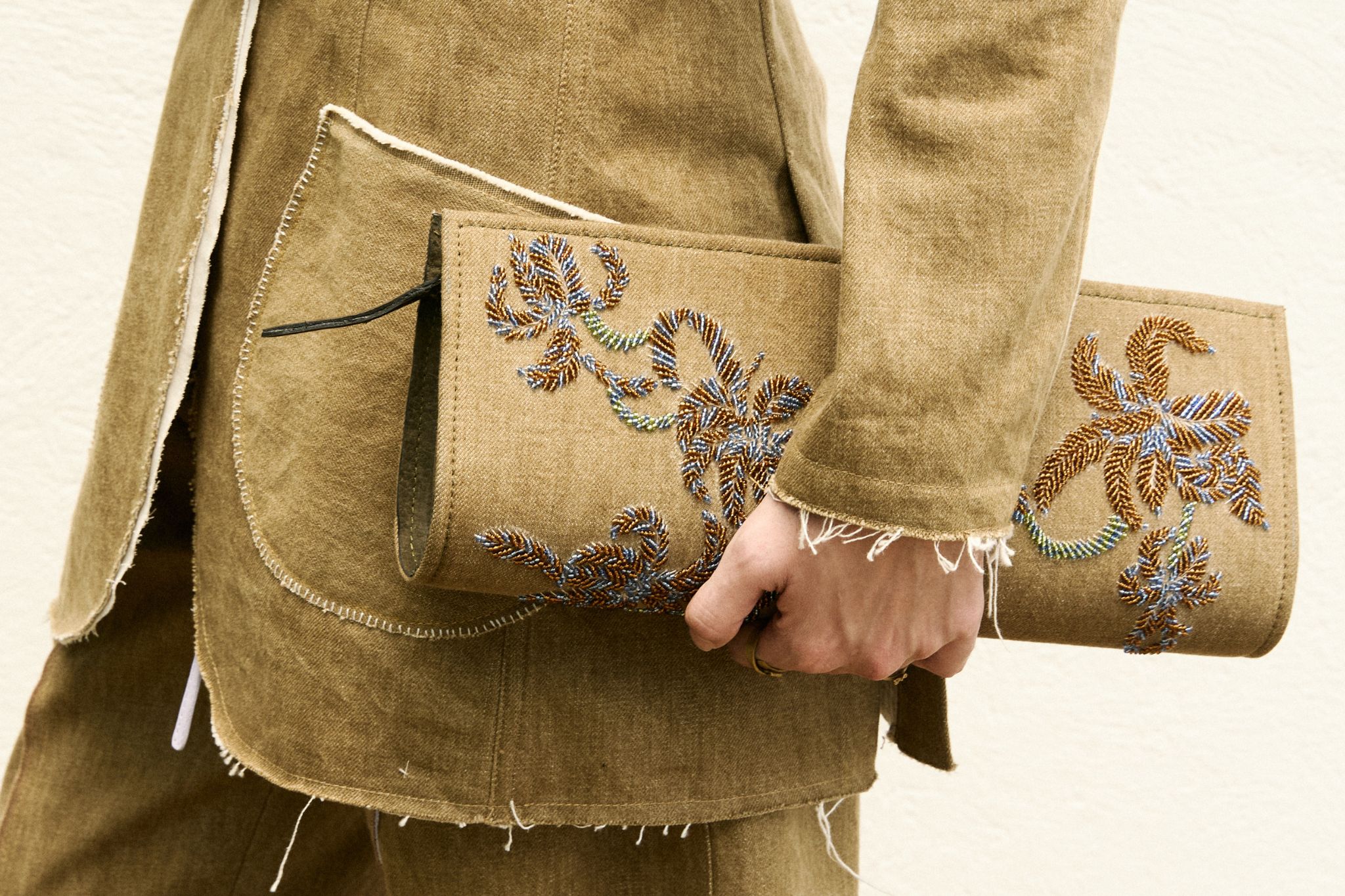
BAGASÁO pieces are designed to be timeless in appeal, with the designer intending them to be worn long after the seasons they were released had passed. Photos by September Grace Mahino.
He also points out the many moving parts involved in exporting local fashion and growing the industry. Aside from manufacturers, fashion organizations, and trade-involved government agencies, there are also customs to contend with. “The FASHIONPhilippines program has been very intentional, but there are so many layers that must be studied so that independent brands can experience its maximum effect,” he opines. “Currently, a lot of us designers put out collections only once a year, but as our Milan mentors taught us, we have to have at least two per year to be able to present outside of the country. That’s just something that makes sense for international buyers, and that’s something we need a lot of help with.”
Bagasao wishes that more people could see and understand the tough reality of running a Filipino fashion label, lying just beneath a glamorous façade. That way, there will be more initiatives tailored to address concrete issues that are keeping the local fashion industry from maximizing its global potential. “As a designer, I don’t want to create a collection just for the frivolity of it. Design has to have intention, and it must be made with the knowledge of what and whom you are promoting,” he concludes. “The world moves so fast, and we don’t want to waste time.”
***
Check out BAGASÁO, the brand, on its official website. Learn more about FASHIONPhilippines in Milan 2026 here and meet its roster of participating Filipino designers and brands.
FASHIONPhilippines is the country’s banner program for marketing local fashion enterprises internationally. With CITEM at the helm, the program has brought local brands to top international trade shows and exhibitions in Paris, New York, Las Vegas, Singapore, and Hong Kong. FASHIONPhilippines Milan is co-presented by the Philippine Textile Research Institute (PTRI) and the Philippine Consulate General in Milan. It is implemented with the support of the Philippine Fashion Coalition (PFC), Fondazione Sozzani, and LIT Fashion Consultancy.